
Compact laser head
Fits into microscopes, imaging heads and OEM instrument housings.

Applications Scientific and biomedical
Stable, clean femtosecond pulses for multiphoton microscopy, photopolymerization and ophthalmic research. Compact fiber sources that fit the instrument, not the other way round.
70 fs
Pulse duration of the BIOLIT 2 fiber laser.
20 MHz
Repetition rate of the BIOLIT 2 fiber laser.
[value] %
Pulse-to-pulse energy stability over [hours] h of operation.
From problem to process
01 · Problem
Research and biomedical setups run for hours, and a drifting source wastes samples and invalidates comparisons. Bulky lasers with water loops add vibration, heat and service visits to a bench that has no room for them.
02 · Requirement
03 · Process
Femtosecond pulses deliver peak power for multiphoton excitation and photopolymerization while keeping average power, and heat in the sample, low. Fiber delivery keeps the beam path simple and the alignment stable.

Fits into microscopes, imaging heads and OEM instrument housings.

The BIOLIT 2 laser head is passively air cooled. No chiller or water loop near the sample.
Stable output keeps images and structures comparable from one run to the next.

CAN and USB control for lab software and instrument controllers.
Evidence
Images and measurements from LITILIT test runs. Every sample lists its setup, settings and magnification.
[Customer] built a LITILIT laser into [instrument type] and moved from prototype to repeatable supply. Here are the stability and uptime numbers.
Read the case studyStarting parameters from our lab. Your sample, dye and optics will move them, so we confirm every number on your own setup.
The laser we recommend for this application.
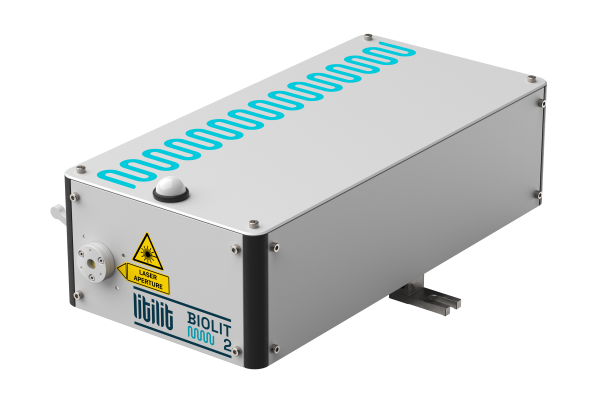
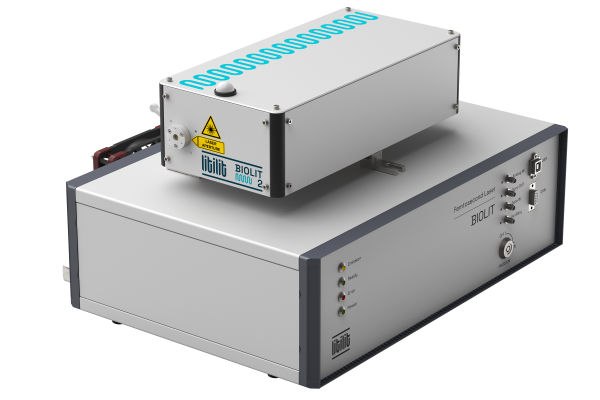
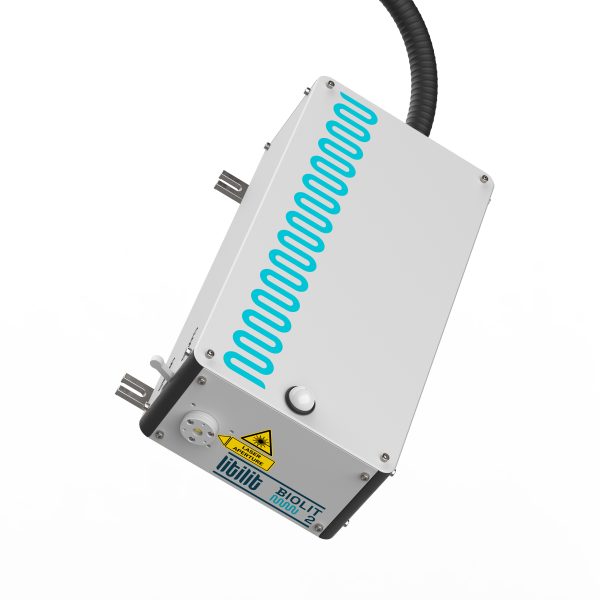
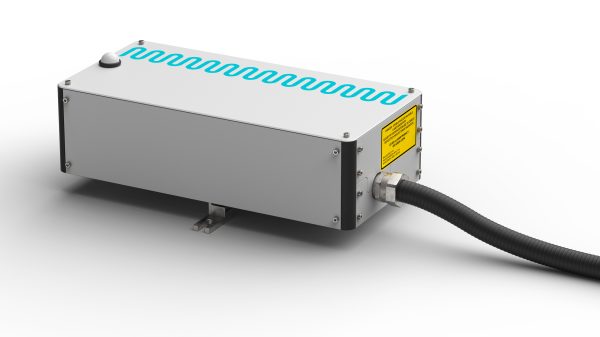
Femtosecond fiber laser for biophotonics: 70 fs pulses at 1050 nm.
 70 fs pulses
 1050 nm · 20 MHz
 2 W average power

Describe your instrument or experiment. Our application engineers suggest a laser and, where possible, test it on your samples in our Vilnius lab.
Tell us the material and the result you need. A laser engineer replies within [response time].
Ask about lead times, volume pricing, supply capacity and long-term availability.
Request a quote